Pouring Filtering Masala Chai Pattern
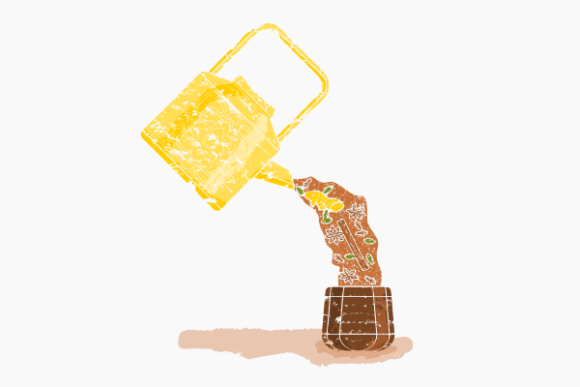
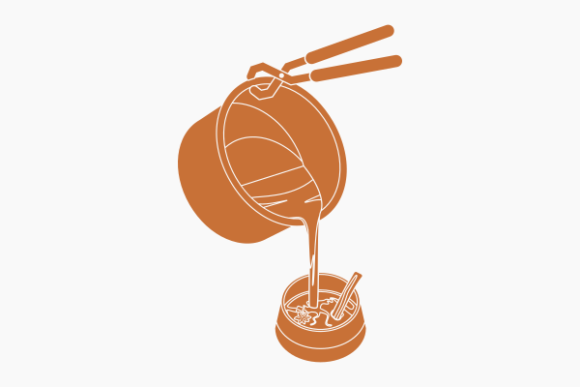
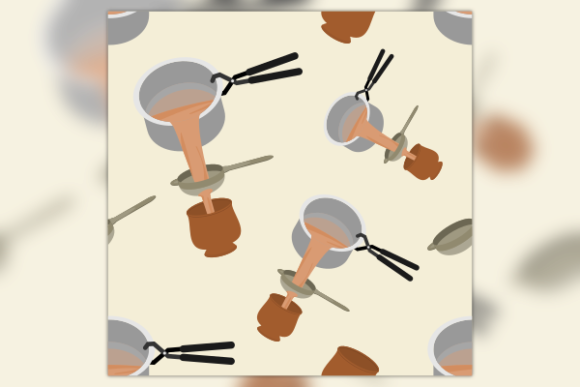
As someone who’s stitched hundreds of designs across apparel, home goods, and boutique gifts—from monogrammed baby blankets to limited-run café aprons—I opened the Pouring Filtering Masala Chai Pattern expecting charm, but what I found was something more: a quiet, confident cultural gesture in vector form. It’s not just “chai art.” It’s a top-down, fluid moment—steam curling, spout tilting, golden liquid cascading from a small brass pan into a hand-thrown pottery cup—all arranged as a seamless repeat. That rhythm matters. When you’re planning a custom embroidered tea towel for a local South Asian bakery or lining the inside pocket of a handmade tote for an Etsy seller, this pattern doesn’t shout. It invites.
First Impressions: Warm, Intentional, and Surprisingly Versatile
The Pouring Filtering Masala Chai Pattern lands with gentle specificity. No generic teacup silhouettes here—this is a culturally grounded illustration: the curved pan, the fine mesh strainer held mid-pour, the subtle texture implied in the pottery’s surface. As a seamless pattern, it breathes across fabric without abrupt edges or visual stutter. That’s rare in food-themed embroidery graphics. Most either oversimplify into flat icons or overcomplicate with cluttered details that won’t translate to stitch. This one walks the line: expressive enough to feel handmade, clean enough to hold up at 3–4 inches wide on a sweatshirt chest or repeated across a pillow cover.
Where It Shines—and Where It Asks for Thoughtful Handling
I tested a mock layout for a linen kitchen towel—6-inch repeat across the lower third—paired with a simple running-stitch border. The result? Instant warmth. Customers browsing a craft fair booth paused longer. One asked, “Is that real masala chai?” That’s the sign of a design doing its job: evoking memory, not just decoration.
It works beautifully on medium-weight natural fabrics: cotton twill for aprons, brushed cotton for baby swaddles, even midweight terry for tea towels. On a soft unisex sweatshirt? Yes—but keep the repeat scale generous (at least 4.5 inches) so the pour remains legible after fabric stretch and stitch compression. As a machine embroidery design, it’s best suited for fill-stitch backgrounds or satin-stitched accents—not micro-detail work. Don’t try shrinking it into a 2-inch hoop for a cap front; the strainer mesh and steam wisps will blur into noise.
For embroidered patches or tote bag designs, use it as a secondary motif—not the sole focal point. Pair it with clean typography (“Chai Hours” or “Steep & Sip”) or a single-line border. On dark fabric, test thread colors carefully: burnt sienna and cream read richer than black-on-navy. And always, always run a test on scrap first—especially if layering over textured weaves or quilting cotton, where stitch density can lift or sink unevenly.
Real-World Fit: From Holiday Gifts to Boutique Branding
Last Diwali, I adapted a cropped section of the Pouring Filtering Masala Chai Pattern into a 3.75-inch circular applique design for organic cotton baby onesies. Paired with mustard-yellow thread and lightweight tear-away stabilizer, it held up through three rounds of washing—no fraying, no puckering. Parents loved the quiet storytelling: not “cute,” but *meaningful*. That’s the difference between filler graphics and design assets that build trust.
For Etsy sellers, this pattern bridges niche and approachable. It’s specific enough to resonate with South Asian customers seeking representation, yet universal enough in its warmth to appeal broadly—think holiday mugs, wedding favors for foodie couples, or “tea & talk” workshop branding. As a digital embroidery file, it adds quiet sophistication to a shop’s lineup alongside florals or geometric repeats. Just remember: if you’re selling finished embroidered products (like personalized sweatshirts or custom tea towels), confirm licensing terms allow commercial use. The description says “can be used for creating background of beverage with South”—so treat it as culturally respectful design, not generic clipart.
What Designers Should Check Before Stitching
- Stabilizer match: Use cut-away for knits, tear-away for stable wovens. Skip fusible web unless you’re doing applique—the vector lines need clean stitch definition.
- Hoop size & placement: Seamless doesn’t mean “no planning.” Map your repeat before hooping. A misaligned seam shows fast on light fabric.
- Thread contrast: Test on both light and dark fabric swatches. Steam lines fade on black; copper-toned thread lifts them back.
- Wash durability: If stitching for baby items or kitchen textiles, avoid high-density fill areas near seams—opt for open motifs or running-stitch outlines instead.
- Brand alignment: Does this fit your shop’s voice? A minimalist Scandinavian brand might find it too illustrative; a cozy, story-driven boutique will lean in.
Final Thought: A Pattern That Feels Like a Shared Moment
The Pouring Filtering Masala Chai Pattern isn’t flashy. It won’t dominate a social media feed with neon gradients or exaggerated scale. But in the hands of a thoughtful designer—or a small shop owner curating meaningful, handmade product—it becomes something quieter and stronger: a visual pause. A reminder of ritual. A detail that makes a customer say, “They *get* it.”
That’s the mark of good embroidery design—not how many stitches it has, but how long it stays in the mind after the needle stops moving.