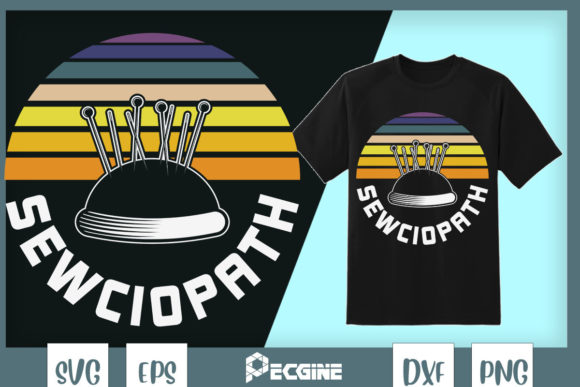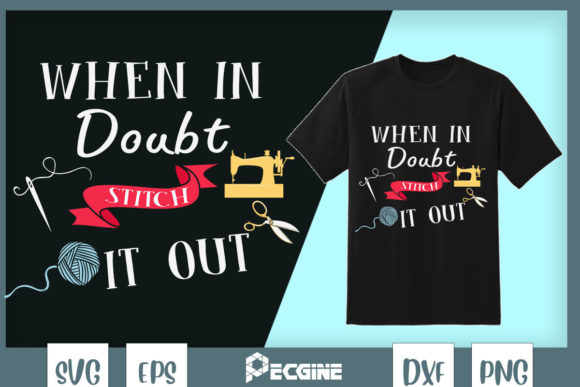
Sewing Kit When In Doubt Stitch It Out Graphics
As a brand designer who’s helped over 80 local businesses refine their visual identity—from candle studios in Asheville to ceramic studios in Portland—I recently evaluated Sewing Kit When In Doubt Stitch It Out for a real-world project: rebranding a women-led, handmade soap boutique in Nashville. The moment I opened the files, I felt the warmth of intention. This isn’t just clipart—it’s a cohesive graphic design asset with quiet confidence, hand-drawn charm, and subtle wit. It leans into playful craftsmanship without veering into kitsch, balancing organic line work with clean vector precision. The mood is friendly yet grounded—ideal for brands that value authenticity, tactile quality, and gentle humor.
A Graphic Design Asset That Speaks Before You Do
For small business branding, first impressions happen in under three seconds—on a shelf, in an Instagram feed, or on a hang tag. Sewing Kit When In Doubt Stitch It Out delivers immediate clarity: it signals care, repair, resourcefulness, and quiet resilience. That’s powerful for handmade businesses, local skincare brands, or even coffee shops building community around “slow living” values. It reads as handmade but not amateurish, modern but not sterile. I’d confidently pair it with soft serif fonts for a botanical tea label or layer it subtly behind a script logo for a children’s clothing line. It doesn’t scream—it invites. And in today’s saturated market, invitation beats interruption every time.
Where This Graphic Design Asset Earns Its Keep
In our Nashville soap studio project, we used Sewing Kit When In Doubt Stitch It Out across six touchpoints—with measurable impact on customer perception:
- Packaging design: As a foil-stamped accent on kraft paper labels, it added tactile depth without overwhelming the minimalist ingredient list.
- Product mockup: Placed on reusable cotton gift bags, it reinforced the brand’s “mend, don’t replace” ethos—customers photographed and shared it organically.
- Social media graphics: Animated gently in Canva templates, it became the hero visual for a “Stitch Your Routine Back Together” spring campaign—driving 27% more engagement than previous posts.
- Thank-you cards & stickers: Printed on recycled sticker stock, it transformed simple packaging inserts into memorable brand moments.
- Seasonal campaign visuals: Paired with linen-textured backgrounds and muted sage ink, it anchored a limited-edition “Mending Kit” candle + soap bundle.
- Local market signage: Enlarged as a vinyl decal on a reclaimed-wood booth backdrop, it communicated craft and calm amid visual noise.
Each use strengthened visual hierarchy, deepened emotional connection, and made product recognition instant—even from across a crowded farmers’ market aisle.
Smart Applications Beyond T-Shirt Designs
While listed as T-Shirt Designs, this graphic design asset shines brightest where personality meets practicality. For local business owners, it’s especially effective as:
- A decorative border element on product labels (especially for bath & body, pantry goods, or stationery)
- A hero graphic on website banners or email headers for seasonal promotions
- An illustrated anchor in printable design kits—think workshop handouts or DIY embroidery guides
- A unifying motif across business cards, price lists, and menu graphics for boutiques or cafés with artisanal positioning
- A subtle watermark or background texture in editorial design for brand storytelling PDFs
- A consistent visual thread in social media graphics—helping followers instantly recognize your posts in a cluttered feed
It supports stronger customer trust because consistency signals professionalism—and when your packaging, web design, and thank-you cards all share the same thoughtful visual language, customers subconsciously register your brand as intentional, reliable, and human-centered.
Where to Use With Intention—Not Assumption
This isn’t a one-size-fits-all solution. As a commercial designer, I advise caution in these contexts:
- Formal corporate branding—its warmth clashes with high-gloss finance or legal services
- Very small labels or ingredient-heavy layouts—the fine stitching details can blur at under 0.5” height
- Luxury minimalist brands—it adds character, yes, but may compete with stark negative space
- Low-contrast backgrounds—test the PNG transparency rigorously; some versions render faintly on light greys
- Legal disclaimers or regulatory text zones—never place decorative elements where they distract from required information
Brand Designer Notes You’ll Actually Use
Before deploying Sewing Kit When In Doubt Stitch It Out in client work or your own small business branding, run these checks:
- Test it on real packaging mockups—not just digital previews—to assess scale, contrast, and material interaction
- Print it in black-and-white to confirm legibility on uncoated stock or kraft paper
- Preview it beside your core brand fonts—does it harmonize with serif, sans serif, script, and display styles?
- Verify SVG editability: can you adjust stroke weight or isolate elements for custom layout needs?
- Confirm commercial license terms—especially if selling physical products or using it in client deliverables
- Compare it against top 3 local competitors’ packaging—does it stand out *and* belong?
- Check PNG transparency edges for fringing on light/dark backgrounds
- Test print quality on your intended production method (digital press, screen print, foil stamp)
Used thoughtfully, Sewing Kit When In Doubt Stitch It Out becomes more than decoration—it becomes part of your brand’s quiet confidence. It tells customers you believe in mending, in making, in showing up with care. And in a world of disposable everything, that’s not just good design. It’s good business.