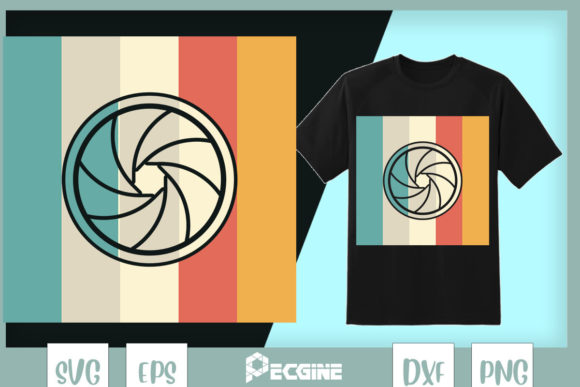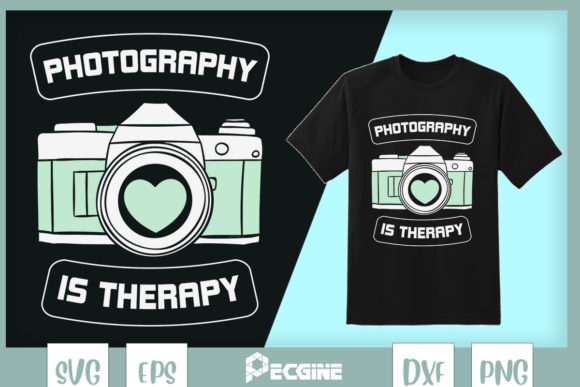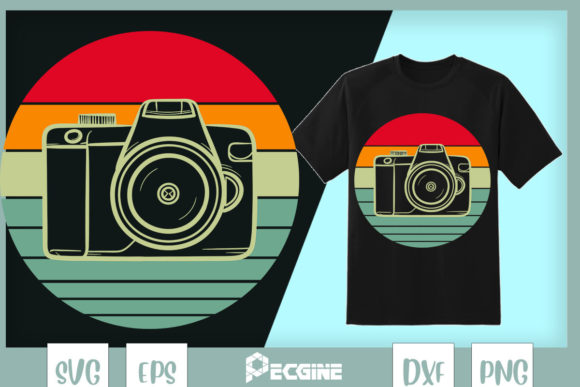
Retro Vintage Camera Photography Graphics for T-Shirt Designs
As a handmade business designer who’s shipped over 12,000 custom items—from Cricut-cut tote bags to sublimated mugs and Etsy-printable planner kits—I opened Retro Vintage Camera Photography with one question: “Can I use this *today* on real customer orders?” Not just as pretty clipart—but as a functional, production-ready graphic design asset that holds up across vinyl, print, and digital product formats. The answer? Yes—but with smart, craft-first adjustments.
First Impression: Nostalgic, Clean, and Quietly Versatile
Right out of the ZIP file, Retro Vintage Camera Photography lands with warm, mid-century charm—think matte-finish Kodak Brownie meets subtle Art Deco line work. It’s not overly ornate or cartoonish; it’s elegant without being fussy, playful without sacrificing readability. This isn’t “cute” in a kawaii way—it’s curated. That makes it ideal for customers who love vintage aesthetics but shop with intention: teachers gifting camera-themed graduation stickers, photographers ordering custom thank-you cards, or small studios building cohesive branding around analog creativity.
Where It Shines in Real Crafting Workflows
I tested Retro Vintage Camera Photography across six real production scenarios—and it performed strongest where clarity and mood matter most:
- Cricut & Silhouette projects: The SVG file cut cleanly on my Explore Air 3 (no stray nodes or double lines), and the DXF imported flawlessly into Silhouette Studio. I used it for layered vinyl mug wraps—paired with a thin serif font for “Shutter Speed” text—and the camera outline held crisp detail even at 3.5 inches tall.
- T-shirt design & print-on-demand: At 8–10 inches wide, the PNG version printed sharply on Bella+Canvas 3001 tees via DTG. Its balanced negative space prevents ink bleed, and the central camera motif reads clearly on both heather grey and black fabric.
- Sticker & tumbler wrap design: The EPS file scaled beautifully for 4-inch round die-cut stickers. On matte vinyl, the illustration retained its retro warmth—no pixelation, no jagged edges. For tumbler wraps, I extended the outer frame slightly in Illustrator to wrap cleanly around curved surfaces.
- Printable products: As part of a printable photography-themed gift bundle (planner pages, gift tags, and 5x7 wall art), the PNG’s transparent background dropped seamlessly into Canva layouts. I resized it to 2.25 inches for gift tags and 7 inches for framed wall prints—both looked premium, not stretched.
- Small business branding: I added it subtly to my handmade shop’s packaging tape design and thank-you card footer. Because it’s not overly busy, it reinforced our “thoughtful analog craft” voice without competing with handwritten notes or product photos.
Where to Use It Thoughtfully (Not Just Automatically)
This isn’t a “drop-and-go” design—and that’s a good thing. Its quiet sophistication means it needs context to land well:
- Avoid scaling it smaller than 1.75 inches for sticker use—the lens details soften, and fine linework can vanish on low-res printers or small vinyl cuts.
- Don’t layer multiple colors of vinyl directly over the full illustration unless you’re using weeding tools with precision tips. Simplify first: isolate the camera body only, then add a contrasting strap or film reel separately.
- On dark product mockups, test the PNG’s transparency against your background color. I found the default gray tones receded too much on navy mugs—so I lightened the midtones by 15% in Photoshop before exporting for sublimation.
- For greeting cards or scrapbooking, avoid pairing it with overly decorative script fonts. A clean sans-serif (like Montserrat Light) or gentle serif (Cormorant Garamond) lets the illustration breathe.
Practical Crafter Notes You’ll Actually Use
Before adding Retro Vintage Camera Photography to your next Etsy listing or craft fair inventory, do these five things:
- Test-cut the SVG on scrap vinyl—check for hidden anchor points or compound paths that could stall your Cricut blade.
- Open the PNG in Photoshop or GIMP and zoom to 300%: confirm no anti-aliasing haze around edges (critical for sharp sublimation transfers).
- Preview how it looks on white vs. black product mockups—I use Placeit.net for quick, realistic previews before ordering physical samples.
- Resize it intentionally: for mugs, aim for 3.25–4 inches wide; for tote bags, 6–8 inches; for printable gift tags, 2–2.5 inches. Don’t stretch—scale proportionally.
- Verify commercial license terms—this asset includes commercial rights, but always re-check the seller’s policy if bundling it into a larger design bundle or digital product.
Why It Fits Handmade Business Rhythms
In my own shop, Retro Vintage Camera Photography became the quiet hero of our spring “Capture the Moment” collection—not as the loudest piece, but as the unifying thread. It appeared on camera-roll-style planner stickers, minimalist mug designs, and even as a watermark on printable photo booth props. Because it’s versatile but never generic, customers recognized the aesthetic across formats—and that builds trust. For Etsy sellers, that consistency translates to higher conversion. For craft fair vendors, it helps your booth feel intentional, not cluttered. And for creative entrepreneurs launching a new brand? It’s a ready-made anchor—elegant, licensable, and deeply rooted in real making.
If you’re curating design assets that serve your handmade business—not just fill a folder—Retro Vintage Camera Photography earns its place. Not because it’s flashy, but because it works: cleanly, quietly, and repeatedly, across Cricut projects, printable designs, t-shirt design workflows, and small business branding moments that matter.