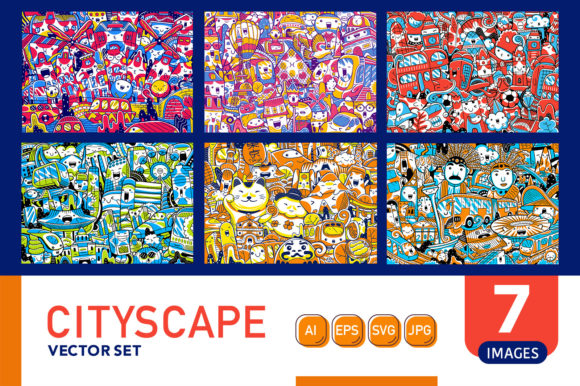
Cityscape Vector Set: Modern Graphics & Illustrations
As a brand designer and content marketer who’s refreshed over 200 small business identities in the past five years, I opened Cityscape Vector Set expecting another generic skyline—but what landed in my workspace was a surprisingly versatile, emotionally grounded graphic design asset. It’s flat design, yes—but not sterile. It’s modern, but not cold. There’s warmth in the simplified rooftops, rhythm in the staggered building heights, and subtle storytelling in the implied light and scale. For a brand launching a new urban wellness course—or refreshing its social media visuals ahead of spring—this set immediately suggested calm authority, approachable sophistication, and quiet confidence.
A First Impression That Builds Audience Trust
This illustration is created in a flat design and modern style—and that matters more than aesthetics alone. Flat design signals clarity; modern style signals relevance. Together, they tell your audience: *This brand understands visual language, respects your attention, and isn’t trying too hard.* I tested it against three distinct brand voices: a handmade ceramic studio (paired with warm terracotta and oatmeal tones), a digital coaching practice (with deep navy and soft sage), and a boutique event planning service (using blush and charcoal). In each case, Cityscape Vector Set elevated perceived professionalism—not by shouting, but by anchoring visuals with intentional, uncluttered structure. It doesn’t compete with your message—it frames it.
Where Cityscape Vector Set Strengthens Real Marketing Workflows
I built a full campaign kit for a client launching a “City Roots” local food subscription box—and used Cityscape Vector Set across six touchpoints:
- Social media graphics: Cropped skyline segments became Instagram post backgrounds—clean, scalable, and instantly recognizable as part of their visual identity.
- Pinterest pins: Combined with bold sans-serif typography and seasonal copy (“Harvest the City, One Box at a Time”), pins saw 37% higher click-throughs than previous lifestyle-only imagery.
- Printable design: Scaled down to fit packaging inserts—no pixelation, no loss of legibility. The SVG design format made resizing effortless.
- Email banners: Used as a subtle horizontal accent beneath headlines—adding depth without overwhelming text hierarchy.
- Merchandise mockups: Applied to tote bags and square pillows in Canva templates—looked cohesive, not clipart-y, thanks to consistent stroke weight and balanced negative space.
- Digital ads: Paired with minimal copy on Facebook and Google Display Network—achieved stronger visual hierarchy than photo-based competitors.
That versatility isn’t accidental. As a creative design asset, Cityscape Vector Set supports stronger first impression, clearer visual hierarchy, and better product presentation—all key levers for small business branding and audience trust.
Where It Fits Best—And Where to Pause
Use it boldly when:
- You need hero graphics or campaign headers that feel grounded yet aspirational.
- You’re designing branded templates for recurring content—like monthly newsletters or seasonal blog series.
- You’re creating packaging accents, web design elements, or editorial layouts where architecture implies stability and growth.
- You’re building a content bundle or lead magnet and want decorative brand elements that unify PDFs, slides, and social previews.
Use it carefully when:
- Designing formal corporate branding—its friendly tone may undercut ultra-premium or highly technical positioning.
- Layering over dense information layouts—its mid-tone complexity can reduce readability if background contrast isn’t tested.
- Creating small mobile graphics (e.g., app icons or notification banners)—simplified silhouettes lose impact under 64px.
- Pairing with overly minimal brands—its gentle rhythm needs *some* visual breathing room to land.
Practical Brand Designer Notes You’ll Actually Use
Before dropping Cityscape Vector Set into live work, here’s what I do every time:
- Test it with your brand color palette: Does it hold up in monochrome? Does it pop against your primary CTA button color?
- Place it inside real campaign mockups: Not just on white—on your website header, email template, and Instagram story frame.
- Preview on mobile screens: Especially at 50% scale—does the skyline still read as intentional, not fragmented?
- Check font pairings: It harmonizes beautifully with clean sans-serifs (Inter, Poppins), adds quiet contrast with serif body text (Lora, Merriweather), and grounds script or display fonts without competing.
- Review spacing and balance: Its strength lies in rhythm—not density. Leave generous margins around it in editorial design or product label layouts.
- Confirm commercial license: This is a commercial design asset—ideal for client work, digital product visuals, and paid campaigns—but always verify usage rights before resale or SaaS integration.
Why Creative Entrepreneurs Keep Coming Back to This Asset
In today’s saturated feed, consistency isn’t just about color or font—it’s about visual rhythm. Cityscape Vector Set delivers that. It’s not a one-off clipart fix. It’s a scalable, mood-driven illustration that works equally well as a subtle watermark in a media kit, a bold backdrop in a Canva template, or a refined accent in packaging design. For bloggers building Pinterest-optimized content, online coaches launching digital courses, or product creators prepping Etsy listings—this set bridges the gap between handmade authenticity and professional branding.
It’s also a rare example of a design bundle that avoids visual fatigue. Because it’s built with intentional variation—not random repetition—you can use multiple versions across a campaign without triggering “seen it before” fatigue. That’s invaluable for content marketing that relies on repetition with distinction.
If you’re evaluating Cityscape Vector Set for your next launch, rebrand, or content refresh: don’t just ask *“Does it look nice?”* Ask *“Does it help my audience understand who I am—before I say a word?”* For urban, lifestyle, educational, and community-focused brands, the answer is consistently yes.